

Latvian Buyer Tested Our Sawdust Pallet Block Making Machine
The visitor arrived with sawdust in a bag, not a purchase order. A pallet block producer from Latvia had travelled to the ThoYu factory in China to settle one question on the spot. Could pine residue from the Baltic region become a pallet block that European assemblers would accept? We ran the trial in our workshop on the multi head hot press extruder. The customer watched every block come out. What follows is that material test, the line we built and the two week startup. It ends with the mold reorder that came after production began.
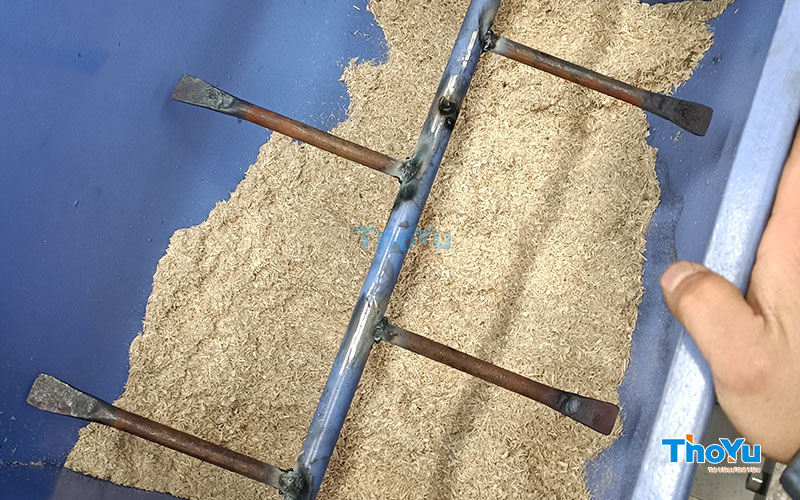
The Raw Material Came From Baltic Softwood
Latvia sits inside a large softwood forestry region. Sawmills there generate a steady flow of sawdust and shavings, and most of it has few good uses. Our customer had this residue available in volume and dried it before transport.
The samples that reached our workshop were pine sawdust mixed with fine shavings. Moisture control mattered from the start. Wet residue presses poorly, and blocks made from it lose shape stability later. The customer asked us to match the drying and pressing conditions to the material it would actually feed at home. Those conditions decide whether a sawdust block making machine produces a block that holds its shape or one that crumbles at the corners.
Why Solid Wood Blocks Were Not Enough
European pallet assemblers have little patience for variation. A block has to hold nails firmly, survive wet and dry cycles, and stay consistent from one batch to the next.
Cutting blocks from solid timber creates heavy waste, and the offcuts are hard to sell. Solid wood also splits. Our customer supplies blocks to EPAL licensed pallet assembly plants in its region, so any inconsistency shows up quickly at the assembly bench.
A compressed wood block pressed from residue behaves differently. It is denser, more uniform in shape, and it has no grain to split along. This is where a compressed wood block making machine fits. It forms blocks from residue instead of cutting them out of solid timber.
We Ran The Trial On The Sawdust The Customer Brought
We did not hand over a datasheet. We loaded the sawdust the customer brought into the multi head hot press extruder and ran blocks continuously, with the customer watching on the shop floor.
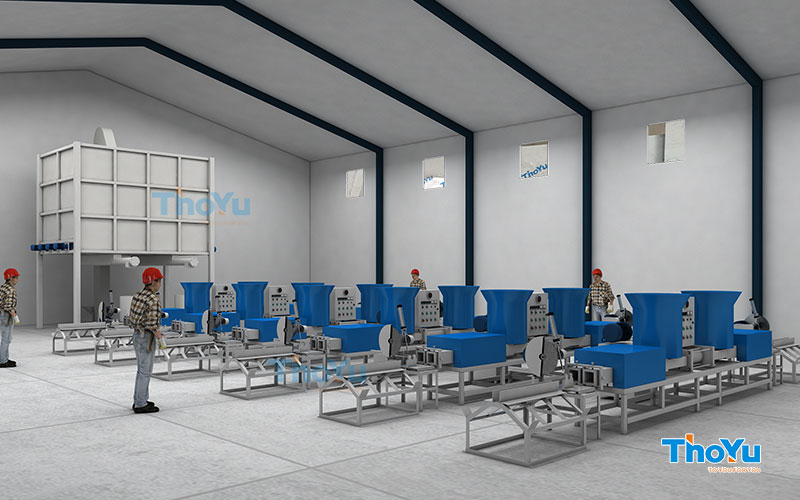
Engineers then checked the cutting dimension tolerance on the finished samples. They also ran a water swelling test to see how the blocks behaved after soaking. Both checks used the trial pieces rather than stored show samples.
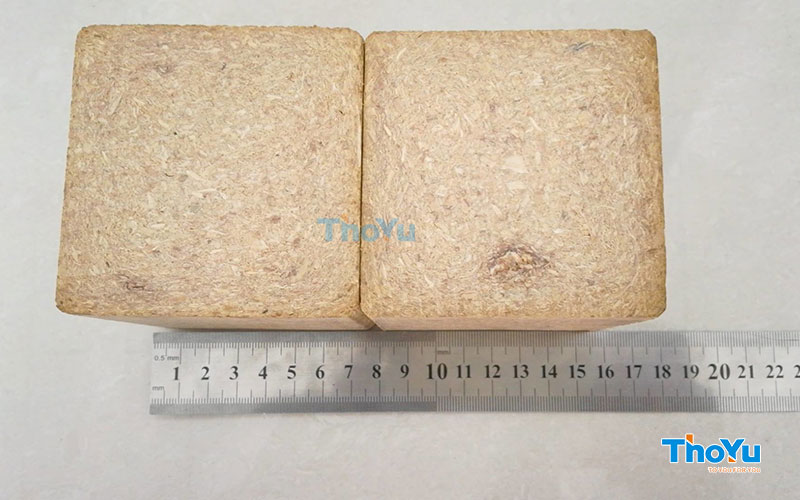
The customer compared those pieces against the solid wood blocks it had been buying. That comparison moved the conversation from price to configuration.
The Line Configuration For This Order
The contract signed in July 2023 covers a complete automatic line. It begins with automatic feeding, so residue goes in without manual shovelling. A glue mixing section prepares the binder. We supplied customized formulation support together with temperature control debugging, tuned to this material rather than to a generic recipe.
. It forms continuous block profiles under heat and pressure. An automatic infrared cutting system then separates each profile into fixed length blocks. The full machine range is described on our sawdust pallet block making machine page.
Please leave a message to receive the production line layout for a Latvian client’s foot block manufacturing operation.
The cutting section deserves more attention than most buyers give it. Clean square cuts keep block dimensions stable, and dimension is the first thing an assembler measures. Where several block sizes are needed, a dedicated pallet block cutting machine handles sizing separately from forming.
Installation And First Production
After shipment we supported the build with remote electrical guidance and a detailed on site manual. The team at the plant completed the installation, and the line began producing usable blocks within two weeks of setup.
Output now goes to pallet assembly plants in the region. Residue that used to be a disposal cost became the main input. ThoYu has run similar rollouts elsewhere in Europe, including a pallet block production line installation in Poland.
Molds And Spare Parts Came Back As A Second Order
Once output stabilised, the customer ordered wear resistant forming molds again, in 75 x 75 mm and 90 x 90 mm sizes, along with spare parts and consumables.
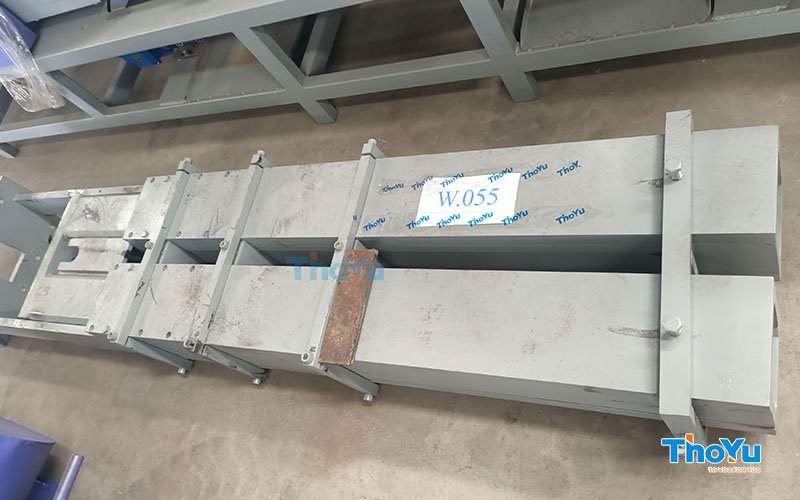
For us that is the strongest signal available. A buyer only reorders molds when the blocks are actually selling. Swapping molds also lets the same line serve different pallet designs, so capacity grows without a second machine.
Bring Us The Residue You Cannot Use
Every wood residue behaves differently. Species, moisture, particle size and binder all change the outcome, so we test the real material instead of quoting a figure from a brochure.
If you have sawdust, shavings or crushed pallet waste and you are unsure what it can become, send us a sample. We will run it on our machines and tell you plainly whether it can produce pallet blocks, and which configuration fits your volume. Contact ThoYu to arrange a material trial or a factory visit.
Post time: Nov-23-2026