

In recent years, the photovoltaic industry has experienced rapid growth, with the entire value chain from raw silicon materials to component production continuously expanding. Logistics costs are becoming one of the key factors affecting their profitability.
The production solution for molded pallets by ThoYu uses recycled waste wood to manufacture special pallets for solar panels, helping photovoltaic enterprises achieve the dual goals of cost reduction, efficiency improvement, and low-carbon operation.
The core challenges faced by PV module logistics
Photovoltaic modules are of high value and have a complex structure. Their materials include glass, brittle solar cells, and alloy frames.
At the same time, large-scale photovoltaic power stations are often located in remote areas such as deserts and mountains, with long transportation distances and complex road conditions. This places extremely high demands on the protective and stability properties of the pallets.
In addition, the sizes of photovoltaic components vary greatly, and customized non-standard pallets are often required. The procurement cost of such pallets can be more than twice that of traditional pallets.
Even if high-strength pallets are selected, after long-distance jolting transportation, they often get damaged due to collisions and cannot be reused, turning the pallets into “one-time consumables”, which in turn increases the single logistics cost.
To address these challenges, molded pallets that combine high performance with environmental friendliness are becoming the preferred solution for photovoltaic logistics.
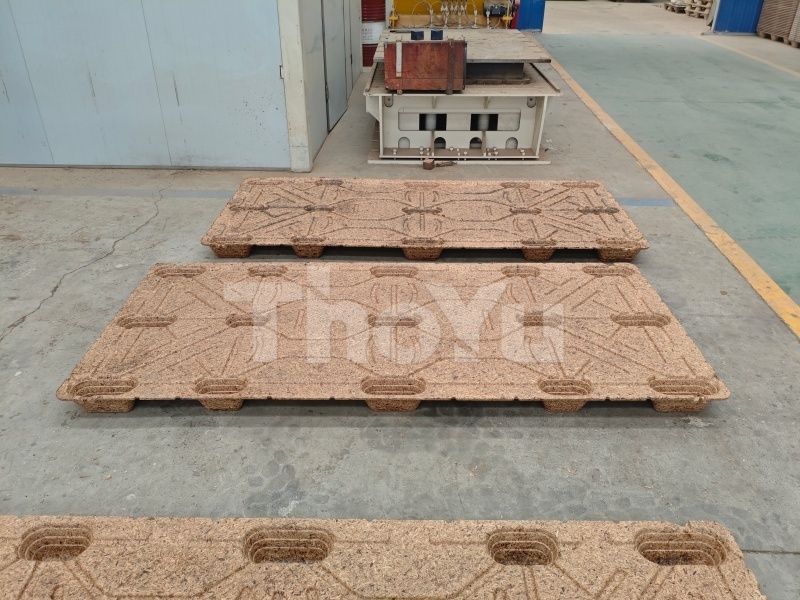
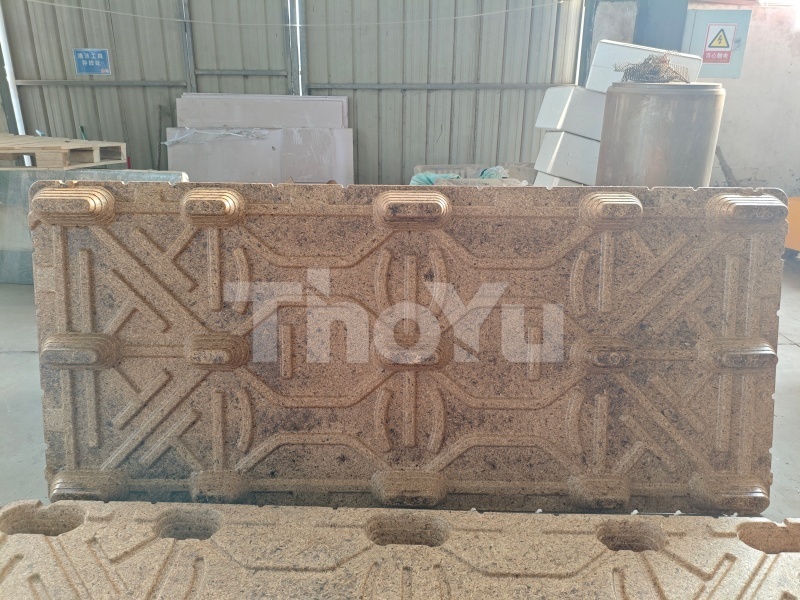
(ThoYu solar panel pallet)
The four core advantages of the molded PV pallet
- Durable and reliable: The molded photovoltaic pallet adopts a one-piece design and is equipped with multiple reinforcing ribs, resulting in a strong and sturdy structure with high load-bearing capacity. There are no nails, which can better protect the goods and prevent scratches during logistics transportation. The unique limit groove design at the edge of the pallet can ensure that the goods will not shift during transportation, avoiding bumps or damages.
- Customization flexibility: For special size requirements of photovoltaic modules, the molded pallets can achieve continuous non-standard customization, enabling them to perfectly fit various sizes of photovoltaic modules.
- Environmental compliance: The production process complies with environmental regulations and meets international standards. Particularly, the molded pallets using MDI glue do not contain formaldehyde and can achieve extremely high bonding strength and excellent waterproof and moisture-proof properties.
- Efficient cost reduction: The molded photovoltaic pallets can recycle waste wood and leftover materials to regenerate molded pallets, significantly reducing raw material costs.
The production process of the solar panel pallet
Recyclable waste wood and leftover materials are crushed by an efficient crusher to form wood chips. These chips are then mixed with glue through a mixing machine and thoroughly stirred with glue water. Finally, they are pressed into a single piece using a Compressed Pallet Machine under high temperature and high pressure.
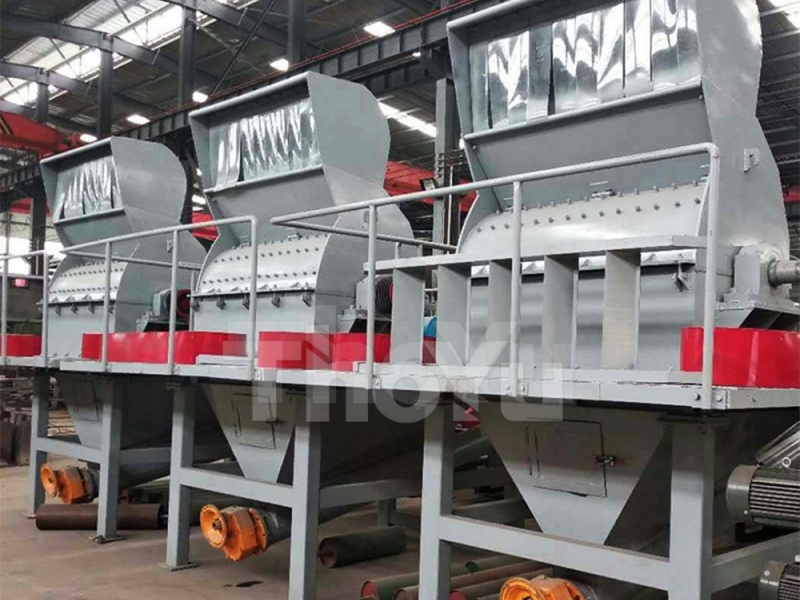
(high-efficiency crushing machine)
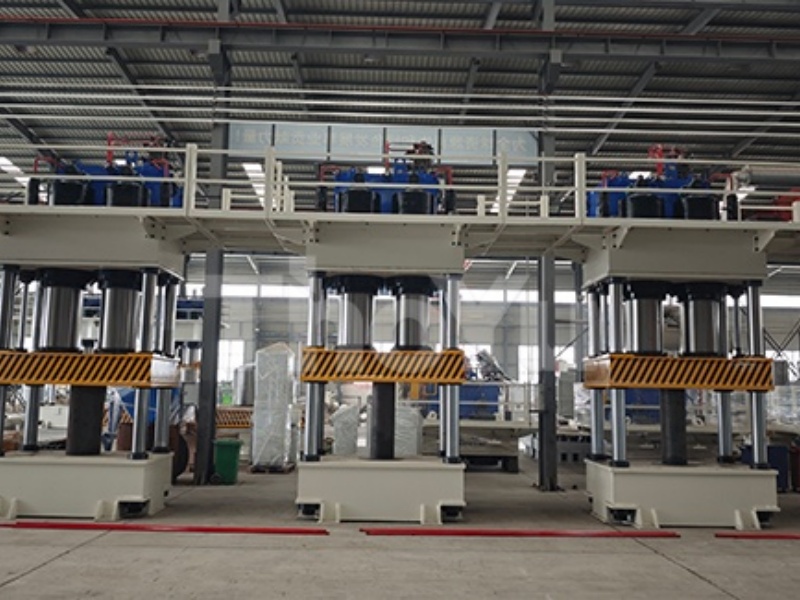
real case
After introducing the ThoYu molding pallet production line to a Fujian company ,utilized the existing factory space and raw material resources to produce 10 pallets per hour, with a daily output of 80 to 100 pallets. This effectively met the monthly demand of thousands of pallets from its end customers.
In the face of the continuously increasing market demand and the increasingly strict environmental requirements, adopting waste wood for the production of recyclable solar panel pallets is not only an effective way for photovoltaic enterprises to reduce logistics costs and optimize supply chains, but also a strategic choice for practicing green manufacturing and enhancing the sustainable competitiveness of enterprises.
Post time: Jan-30-2026